Japan's Big Four Motorcycle Makers Charge into an Electric Future
While electric motorcycle buzz often centers on flashy startups or spin-offs from legacy carmakers, Japan's iconic motorcycle manufacturers have been quietly—and now increasingly loudly—developing their own electrification strategies. Honda, Yamaha, Kawasaki, and Suzuki are gradually assembling product portfolios, upgrading factories, and committing to long-term roadmaps that signal a decisive pivot to electric mobility. In this Q&A, we explore how each company is approaching the transition, what models are in the pipeline, and how their collective moves are reshaping the global motorcycle industry.
Why are Japanese motorcycle giants only now accelerating their electric bike efforts?
Japanese manufacturers have traditionally mastered incremental innovation and reliability—qualities that don't align with the rapid, disruptive launches often seen in the EV startup scene. For years, they observed the market, refined battery and motor technologies, and waited for infrastructure and consumer readiness. Now, with tightening emissions regulations, growing demand in key markets like Europe and Southeast Asia, and clear competitive pressure from Chinese and American electric brands, the Big Four are moving decisively. Honda, for example, has pledged to make 80% of its motorcycle sales electric by 2030. Yamaha is focusing on swappable battery standards, while Kawasaki and Suzuki are developing modular platforms. Their approach is methodical: they aim to leverage their manufacturing scale, global dealer networks, and reputation for durability to produce electric bikes that are as reliable as their gasoline counterparts, without rushing flawed products to market.
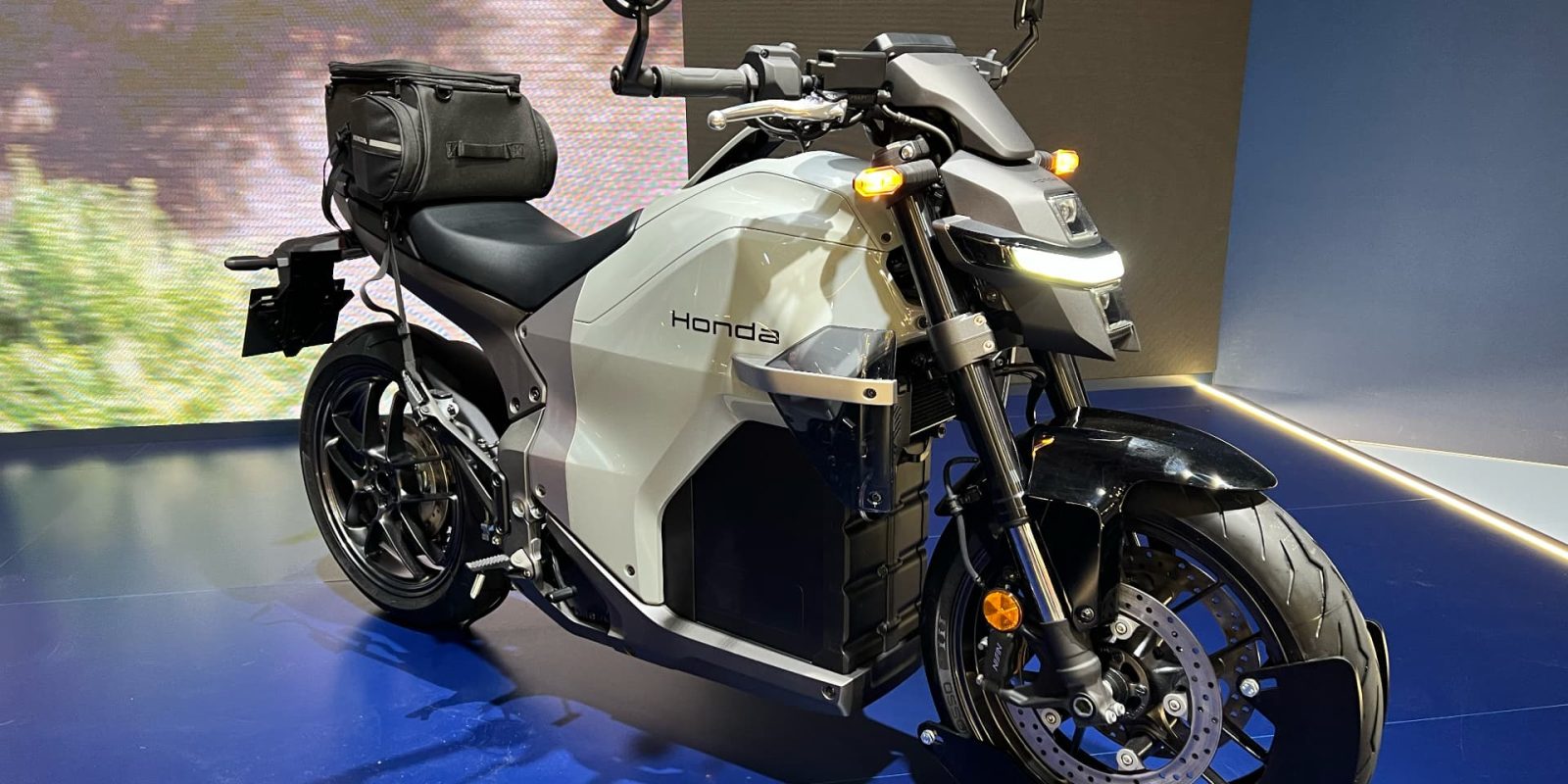
What specific electric motorcycles has Honda announced so far?
Honda has outlined a three-tier strategy. By 2024, it launched the EM1 e:, a compact commuter with a swappable Honda Mobile Power Pack battery—ideal for urban delivery and short trips. For 2025, Honda will introduce a 125cc-equivalent electric scooter and a more powerful, 400cc-class electric motorcycle aimed at experienced riders. The company is also developing an electric version of its iconic Super Cub and a range of fun, lightweight models for younger markets. A key innovation is the Honda RoadSync connectivity system, which will link these electric bikes to a smartphone app for battery monitoring and route planning. By 2030, Honda plans to roll out 30 electric models globally, covering everything from mopeds to touring bikes, and invest ¥500 billion in electrification R&D.
How is Yamaha differentiating its electric motorcycle strategy?
Yamaha is betting heavily on swappable battery standardization. In partnership with Honda, Kawasaki, Suzuki, and battery expert Panasonic, Yamaha helped create the Swappable Battery Consortium for Electric Motorcycles. This consortium aims to make batteries interchangeable across brands, reducing range anxiety and infrastructure costs. Yamaha's own electric lineup includes the E-Vino scooter and the E01 maxi-scooter for fleet use, but the company is also developing a fully electric sports bike called the YZF-R1e (concept revealed in 2023). Yamaha's strength lies in its cross-industry expertise—from marine engines to robotics—which it leverages for lightweight battery enclosures and advanced motor controllers. Additionally, Yamaha is the first Japanese brand to openly discuss licensing its e-bike platform to smaller manufacturers, a move that could accelerate industry adoption.
What role does Kawasaki play in the electric motorcycle race?
Kawasaki surprised many by announcing not just one, but a family of electric and hybrid models by 2025. The company's first fully electric street bike, the Ninja e-1 and Z e-1 (naked version), launched in late 2023 in Japan and Europe. These are 125cc-equivalent models with dual removable batteries. But Kawasaki's boldest move is its hybrid system—the first-ever for motorcycles. The Ninja 7 Hybrid pairs a 451cc parallel-twin engine with an electric motor, offering three modes: EV-only, Hybrid, and Sport-Hybrid Boost. This gives riders the flexibility of zero-emission short trips with the range for longer journeys. Kawasaki is also working on a hydrogen combustion engine prototype, showing it's exploring multiple clean-energy paths. With its aggressive timeline and willingness to embrace hybrids, Kawasaki could capture riders who aren't ready to go full electric.

Is Suzuki lagging behind the other Japanese brands in electrification?
Suzuki has been the most cautious of the Big Four, but it's now laying concrete plans. The company has announced it will launch its first mass-market electric motorcycle in FY2025 (fiscal year ending March 2026), built on a dedicated EV platform co-developed with Toyota and Daihatsu, leveraging expertise from the car division. Suzuki's focus is on small-capacity electric scooters for its strong markets like India and Indonesia, where two-wheelers dominate. The Burgman Street Electric e-scooter, already sold in limited fleets, will be expanded. Suzuki's strategy is to leverage its partnership with the global consortium (including Honda and Yamaha) to adopt the common swappable battery standard, reducing development costs. While slower than its competitors, Suzuki's methodical approach—emphasizing affordability and practicality—could make it a strong player in emerging markets where price sensitivity is high.
How are these Japanese companies cooperating (and competing) on electric motorcycle development?
They are engaged in a unique blend of cooperation and competition. The most visible collaboration is the Swappable Battery Consortium (Honda, Yamaha, Kawasaki, Suzuki, and later expanded to include Piaggio and KTM) that standardizes battery packs, mounting systems, and swap stations. This reduces the risk of incompatible infrastructure and lowers costs for all. Separate from that, Honda and Yamaha are jointly developing a shared electric scooter platform for the European and Asian markets. They also share research on motor and power electronics through the Industry-University Cooperative. However, each company fiercely protects its unique brand identity, design language, and high-end performance models. Kawasaki's hybrids, Honda's mass-market platform, and Yamaha's sports e-bike concepts show they are also racing individually for consumer loyalty. This dual strategy—cooperation on infrastructure and standards, competition on product—mirrors how Japanese automakers approached hybrid technology in the 2000s.