Pepper Gets a Design Revolution: New Brand Milly Challenges Spice Aisle Status Quo
Pepper Gets a Design Revolution: New Brand Milly Challenges Spice Aisle Status Quo
NEW YORK, NY — A new direct-to-consumer brand is giving pepper the aesthetic and functional makeover that olive oil, salt, and even chili crisp have already received. Milly, launched May 12 by former line cook Michael Laniak, offers whole peppercorns—black, white, and green—along with color-matched pepper mills, starting at $14 a tin and going up to $78 for a complete set.
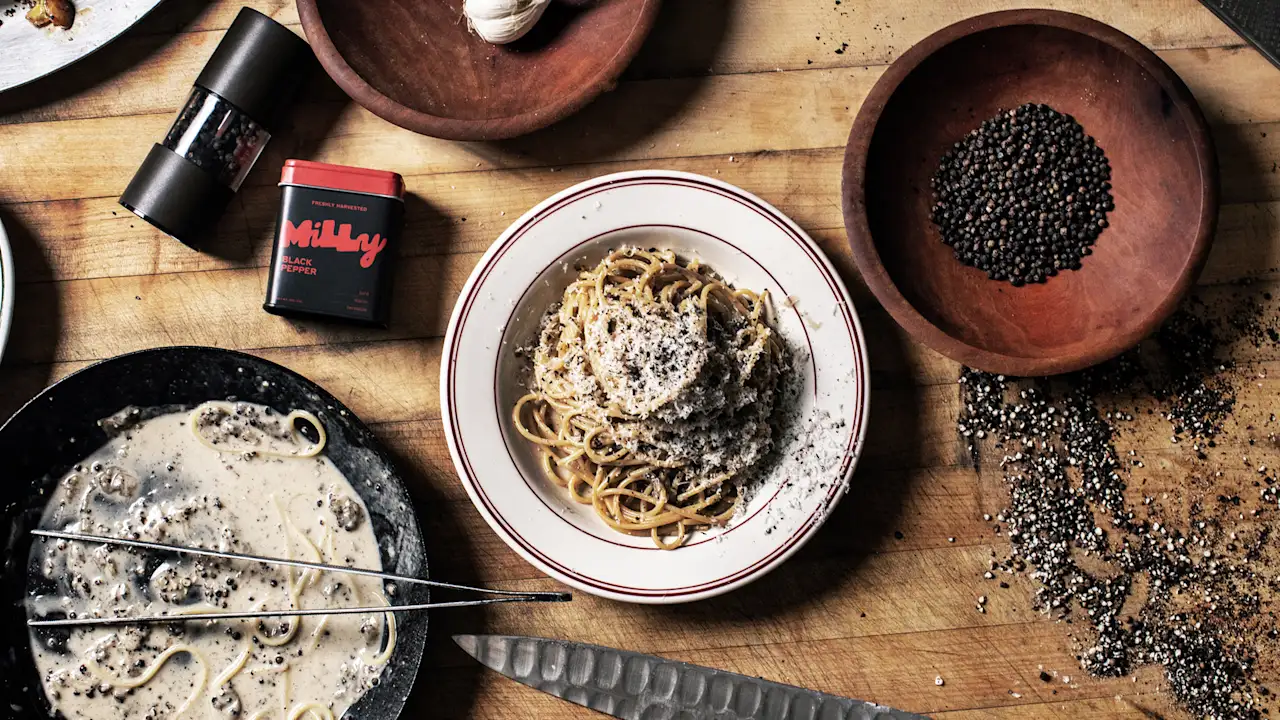
“Pepper has been the forgotten spice on the shelf,” Laniak said in an interview. “I wanted to bring the same intentionality to it that we see in other pantry staples.” The brand’s hand-lettered logo and bold color system are a stark departure from traditional spice packaging, which typically uses serif fonts on white or red backgrounds.
“Milly’s design is not just about looks; it’s about functionality and experience,” said Cassie Scowcroft, the in-house designer who hand-lettered the logo. The uneven, organic strokes and mix of upper- and lowercase letters nod to the fact that the peppercorns are handpicked, she added.
The tins use color to denote flavor: red for bold black pepper, bright green for fresh floral green, and cream on brown for subtle earthy white. The brand is available only online at Milly’s website, and the product line has already drawn comparisons to Graza olive oil and Maldon salt in terms of counter-worthy packaging.
Background
Michael Laniak spent years in commercial kitchens as a line cook, where he grew frustrated with the limited sourcing options for pepper. Unlike olive oil or sea salt, which have premium DTC brands, pepper remained a commodity item with little design innovation.
“I could find a single-origin olive oil but not a pepper that felt intentional,” he said. Milly was created to fill that gap, selling only whole peppercorns to preserve freshness and flavor. The company sources from specific regions and processes each variety differently to achieve distinct taste notes.
The packaging is equally deliberate. The high-contrast weight variations in the hand-lettered logo give it an analog feel, a deliberate contrast to the sterile, corporate look of competitors like McCormick. “We wanted Milly to feel personal and approachable, not industrial,” Scowcroft said.
What This Means
Milly’s entry signals a broader shift in food branding toward artisanal aesthetics and direct-to-consumer models. Pepper, long considered a “good-enough” spice, is now being positioned as an experience worth paying a premium for.
“We’re seeing a micro-trend of chunky, hand-lettered logos in food design,” said branding consultant Anna Lee. “It’s a reaction to the sleek minimalism of the past decade.” Milly’s launch could inspire competitors to revisit their own branding, pushing the entire spice category toward more thoughtful packaging.
For consumers, this means more options that treat everyday ingredients as design objects. But it also raises questions about accessibility: the $78 trio set is a luxury purchase for many. Still, Laniak believes that quality and visual appeal justify the price: “If you’re going to leave something on your counter every day, it should be beautiful.”